Quick Answer
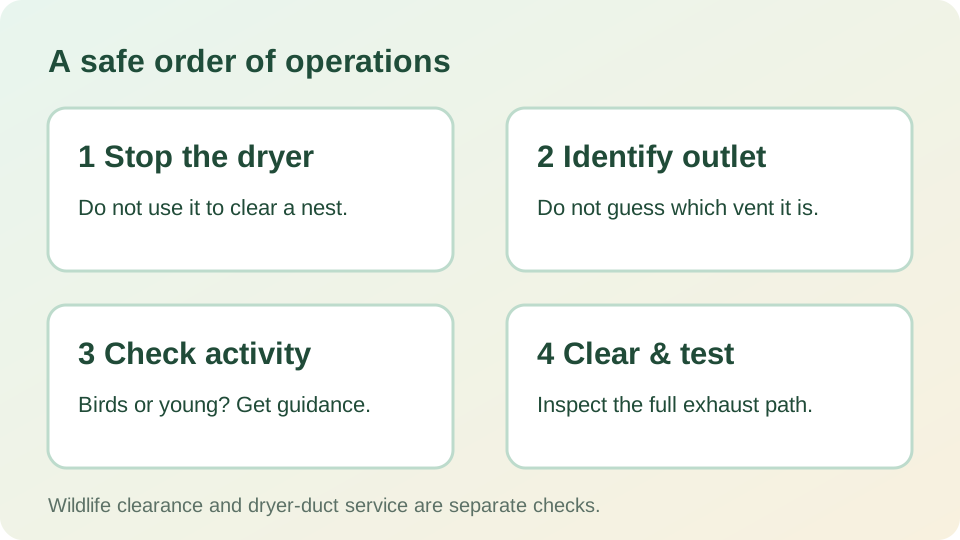
If birds are entering an opening you believe is the dryer exhaust, stop using the dryer until the outlet and duct have been checked. Do not run a cycle to drive birds out, push a brush or vacuum into a possibly occupied vent, or cover the opening. First confirm which vent actually serves the dryer. If a bird, eggs or young may be present, ask a qualified wildlife professional and your state wildlife agency about the lawful next step. After the vent is clear, have the exhaust path cleaned and its airflow checked before using the dryer again.
The outside hood can look like an ordinary wall vent. That is why this job has two separate parts: what is living at the opening, and whether lint or nesting material is restricting an appliance exhaust. Solving only one part leaves the other unresolved.
First, Make Sure It Is the Dryer Vent
Homes can have nearby dryer, bathroom-fan, kitchen-hood and attic vents. From a safe position on the ground, note the opening's location and hood style, then trace the dryer exhaust route from the appliance if it is safely accessible without moving heavy equipment or disconnecting gas or electrical parts. A dryer outlet commonly has a flap that opens when the dryer runs, but do not switch on a dryer to test a vent you suspect is occupied or blocked. If you cannot confidently match the outlet to the appliance, a dryer-vent technician can identify it.
Do not assume a wall opening below the eaves is a dryer vent just because a bird goes in. The right prevention hardware depends on what the opening serves; an attic or bathroom vent has different airflow needs.
What the Signs Can and Cannot Tell You
| What you notice from a safe distance | What it may mean | Next step |
|---|---|---|
| Birds repeatedly enter with nesting material or food | Current use; eggs or young may be inside, but you cannot see the whole duct | Stop dryer use and get wildlife guidance before any removal or closure |
| Chirping behind the hood | Possible young birds; species and exact nest position remain uncertain | Do not probe or block the opening; ask a qualified responder |
| Lint, twigs or feathers at an apparently empty hood | Possible past nest, blocked flap or deeper obstruction | Do not restart yet; have the full exhaust path inspected and cleaned |
| Longer drying times, excess heat or weak exhaust | Airflow may be restricted, but a nest is not the only possible cause | Stop use and arrange dryer and duct service |
CPSC notes that an obstructed exhaust path can contribute to dryer overheating and that unusually long drying time can signal a blockage. The U.S. Fire Administration recommends keeping the venting system unrestricted and checking that the outdoor cover opens properly. Those signs establish a reason to stop and inspect, not a diagnosis of birds.
Do Not Treat a Suspected Active Nest as Routine Lint
The U.S. Fish and Wildlife Service has a federal authorization for certain migratory birds and active nests inside human-occupied buildings, subject to its conditions. It explicitly does not cover an in-use nest on the building exterior. A nest at a dryer hood or partway inside a duct can make that boundary uncertain. Do not infer from this guide that every bird nest is protected in the same way, or that every vent nest may be removed without a permit. State and local rules may add requirements. Ask your state wildlife agency or the USFWS regional migratory-bird office for the specific case before disturbing a bird, eggs or young.
That legal check does not make the appliance safe to use in the meantime. Keep it off. Never seal an opening while activity is unresolved; a cover can trap wildlife and leave debris in the exhaust route.
Who Does Which Part of the Job?
- Wildlife assessment. A qualified responder establishes whether the site is active, where the birds or nest may be, and what handling or timing is lawful. Ask how young birds and a return visit will be addressed. Do not accept “they flew away once” as proof a duct is empty.
- Duct and appliance service. After wildlife clearance, a dryer-vent professional checks and cleans the complete exhaust path, not just the visible hood. Ask about the transition duct, long runs, bends, exterior termination and any damaged flap. The professional should confirm the dryer exhausts outdoors and that the outlet operates freely before you restart it.
- Prevention that preserves airflow. Have the damaged hood or damper repaired or replaced with a design appropriate for a dryer. Do not staple fine mesh or a generic bird screen across the exhaust. DOE/PNNL warns that lint can accumulate on dryer-vent screening and increase fire risk; follow the appliance and vent manufacturer's requirements.
A single provider may coordinate both tasks, but ask for each part in writing. “Nest removed” does not prove the duct is clear; “duct brushed” does not establish that an active nest was handled lawfully.
What to Ask Before Paying for a Repair
- Which exterior opening was confirmed to connect to the clothes dryer?
- Was the nest active, and how was occupancy checked without trapping birds or young?
- What federal, state or local wildlife guidance applies to this specific case?
- Was the full duct inspected and cleaned, including bends and the exterior hood?
- Was the outside flap or damper tested, and is the proposed replacement rated or specified for dryer exhaust rather than an attic or bath vent?
- What photo or written evidence shows the work is complete, and who returns if activity resumes?
When It Is Urgent
If there is smoke, a burning odor, unusual heat, or a fire alarm, stop using the dryer and contact the appropriate local emergency service. Do not move a hot appliance, disconnect a gas connection, or reach into a vent to investigate. If a bird enters the living space, keep people and pets clear and ask local animal control or a qualified wildlife responder for help.
This is a dryer-exhaust problem, not a chimney-flue problem. If the animal is in a fireplace chimney instead, use the separate chimney decision guide; chimney caps and dryer terminations are not interchangeable.
Sources and Review Scope
- U.S. Consumer Product Safety Commission: Overheated Clothes Dryers Can Cause Fires — restricted airflow and long-drying warning signs.
- U.S. Fire Administration: Clothes Dryer Fire Safety — professional servicing and free-moving outdoor vent cover.
- DOE/PNNL Building America: Reduce Pest Intrusion — wildlife entry at vents and lint risk with dryer-vent screening.
- U.S. Fish & Wildlife Service: Authorized Activities, Birds in Buildings — federal interior/exterior authorization boundary.
Sources reviewed September 23, 2026 (ET). This is a homeowner decision guide, not an on-site appliance inspection, wildlife permit determination or legal advice. Confirm current local rules and equipment instructions before work.