Quick Answer
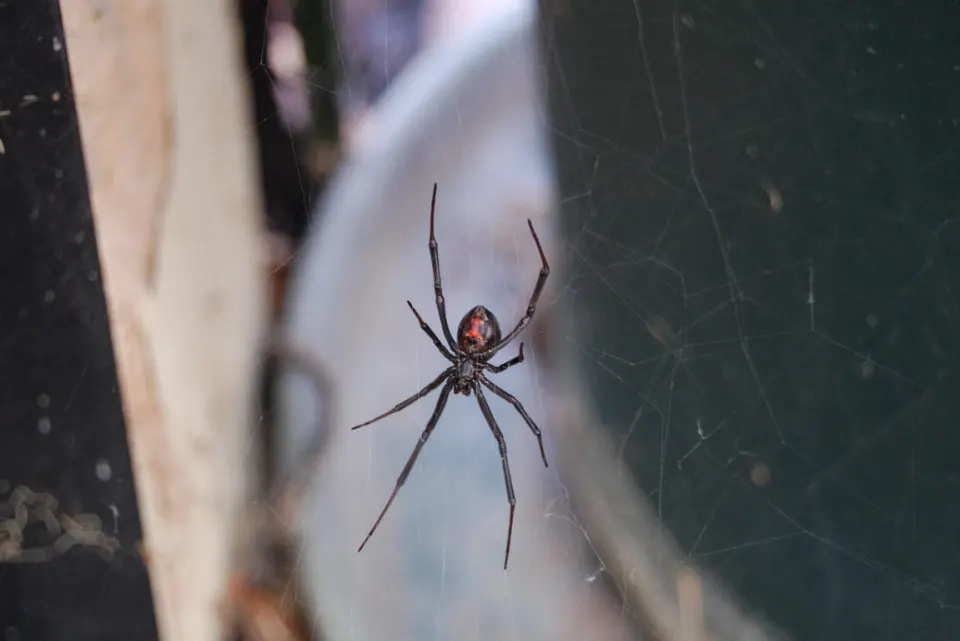
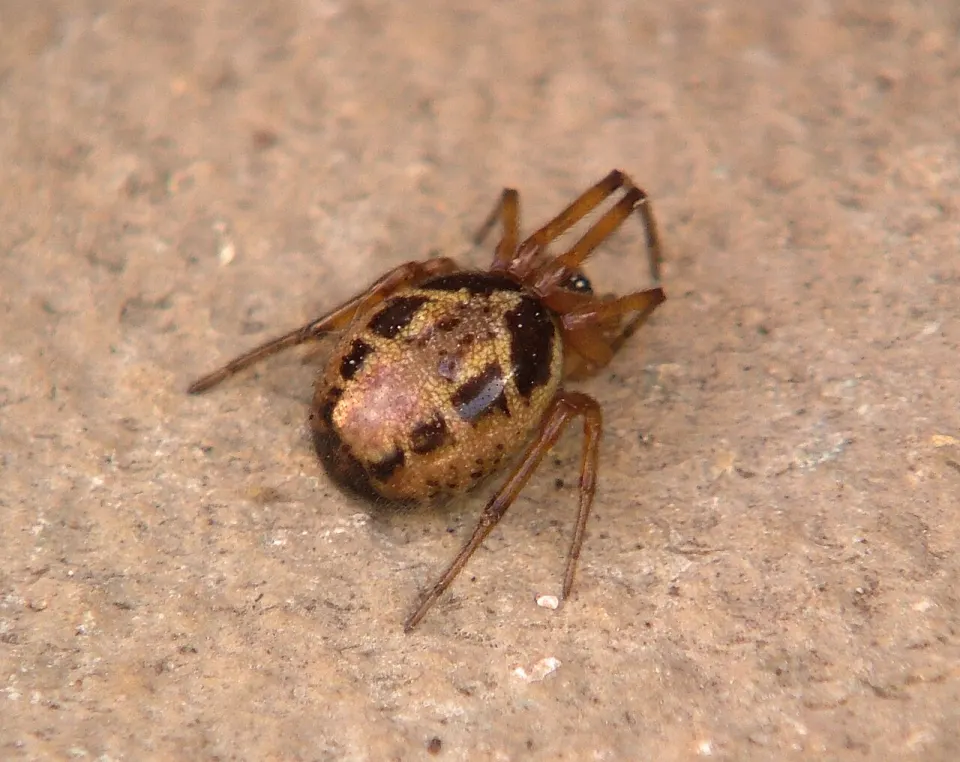
Black widow spiders and false widow spiders (Steatoda genus) are frequently confused because they look similar. The key difference: black widows have a distinct red hourglass marking on the underside of the abdomen, are glossy black, and have a round, bulbous abdomen. False widows lack the red hourglass, have lighter brown or purplish coloration, and often have cream or white markings on the abdomen. Size overlaps — both females run roughly 6-10 mm body length with a leg span up to 38 mm (1.5 inches) — so rely on markings, not size alone. False widow bites are painful but not medically significant, while black widow bites require medical attention.
Black Widow vs False Widow: Why Identification Matters
Black widows (Latrodectus species) are the most medically significant spider in North America. Their venom is a neurotoxin that can cause severe symptoms. False widows (Steatoda species) are often mistaken for black widows and killed unnecessarily, but they are relatively harmless to humans. Accurate identification helps you take appropriate precautions without harming beneficial spiders.
For more on Texas spiders, see our Texas Poisonous Spider Identification Guide.
Quick Comparison Table
| Feature | Black Widow | False Widow (Steatoda) |
|---|---|---|
| Color | Glossy jet black | Dark brown, purplish-brown, or black |
| Abdomen Markings | Red hourglass (underside) | Cream, white, or pale markings (top); no hourglass |
| Abdomen Shape | Round, bulbous, smooth | Round but often less bulbous |
| Legs | Long, slender, black | Similar length, sometimes banded |
| Web | Messy, irregular cobweb | Messy, irregular cobweb (similar) |
| Leg Span | Up to 38 mm (1.5 inches) female | Up to 30 mm (1.2 inches) female |
| Size (Female) | 8-10 mm body length | 6-10 mm body length |
| Size (Male) | 3-5 mm (smaller, harmless) | 4-7 mm (smaller) |
| Venom Risk | Medically significant (neurotoxin) | Mild (similar to bee sting) |
| Geographic Range | Throughout US, more common in South | Worldwide, introduced to US |
Size and Leg Span: What the Numbers Say
Both spiders look similar at a glance because their body sizes overlap. Mature female black widows run 8-10 mm in body length — about the size of a pea — with a leg span up to 38 mm (1.5 inches), roughly the width of a matchbook. False widow females (Steatoda) are comparable at 6-10 mm body length but their leg span usually tops out near 30 mm. Males of both species are smaller: black widow males 3-5 mm, false widow males 4-7 mm. Since the ranges overlap, size alone never identifies either species — you still need to check the underside for the red hourglass. Egg sacs differ too: a black widow egg sac is a rounded, papery ball 9-12 mm across with a distinctive spiky or tufted surface, while false widow egg sacs are smaller, smoother, and enclosed in a more loosely woven sac.
The Red Hourglass: The Definitive Identifier
The single most reliable identifier is the red hourglass marking on the underside of the abdomen. This marking is present on mature female black widows. It is bright red, clearly shaped like an hourglass, and located on the belly (ventral side) of the spider. False widows do NOT have a red hourglass. They may have cream, white, or pale markings on the top (dorsal) side of the abdomen, but never a red hourglass on the underside.
Other Visual Differences
Color and Shine
Black widows are glossy jet black — they look like polished black beads. False widows are typically dark brown or purplish-brown, not glossy black. Some false widow species have a velvety appearance.
Markings on the Top of the Abdomen
False widows often have a pale band or row of cream-colored spots on the top of the abdomen. Black widows may have a red spot or two above the spinnerets, but they do not have cream or white markings on the top of the abdomen.
Juvenile Differences
Juvenile black widows are lighter in color (tan, gray, or whitish) and develop black coloration as they mature. They may have a series of white or cream stripes on the abdomen. Juvenile false widows look similar to their adult counterparts. The red hourglass develops as the black widow matures.
Male vs Female
Only female black widows are medically significant. Male black widows are smaller (3-5 mm), lighter in color, and have longer legs relative to body size. They do not have the red hourglass marking and are not considered dangerous to humans. The same applies to false widows — females are the ones you are likely to encounter in webs.
Geographic Range
Black widows are found throughout the United States, but are most common in the southern and western states. False widows have been introduced globally and are now common in many parts of the US, particularly in coastal areas and urban environments. The noble false widow (Steatoda nobilis) is established in California and parts of the Pacific Northwest.
Bite Symptoms and Treatment
| Aspect | Black Widow Bite | False Widow Bite |
|---|---|---|
| Pain Level | Severe, immediate | Mild to moderate, local |
| Systemic Symptoms | Muscle cramps, nausea, sweating, hypertension | Rare; local redness, swelling, itching |
| Medical Attention | Required (antivenom available) | Not usually needed |
| Healing Time | 3-7 days with treatment | 1-3 days |
| Fatalities | Extremely rare (none in US in decades) | None reported |
FAQ: Black Widow vs False Widow
Can false widows bite?
Yes, false widows can bite, and the bite can be painful. However, the venom is mild and symptoms are typically limited to local pain, redness, and swelling. It is comparable to a bee sting for most people.
Are false widows aggressive?
No. Like black widows, false widows are not aggressive and will only bite if pressed against skin or handled. They prefer to flee or play dead when threatened.
Sources: US Fish and Wildlife Service, USDA Wildlife Services, state wildlife agencies, CDC, academic extension services. This guide is for informational purposes only and does not constitute professional wildlife management advice.